
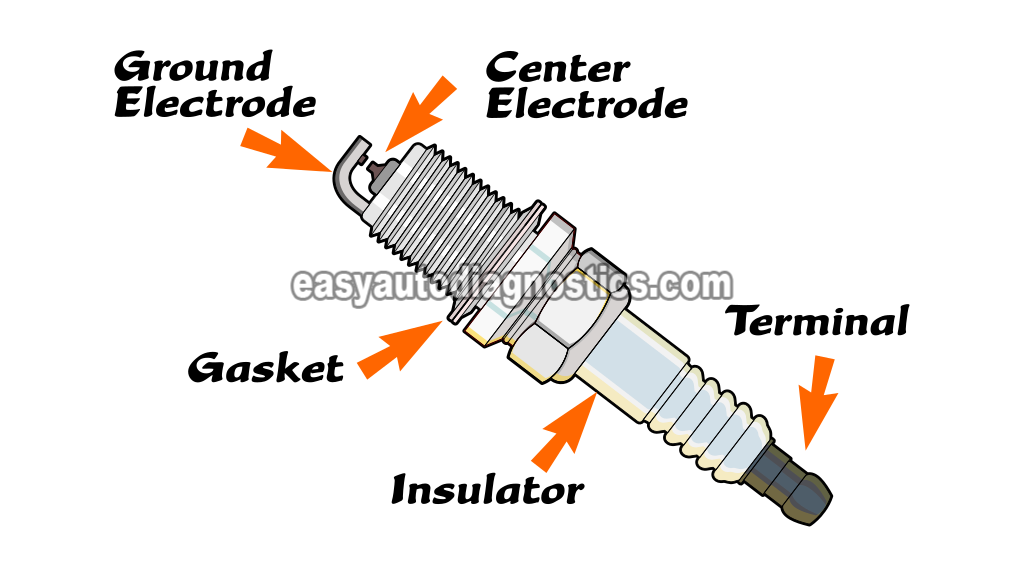
Although spark plugs are the smallest ignition system components on your 2.2L Isuzu Rodeo or Isuzu Amigo, they have a big job to do. Each one has to deliver a strong spark inside the cylinder so the air-fuel mixture can ignite and the engine can run smoothly.
As spark plugs wear out or get fouled, they can no longer fire the air/fuel mixture like they should. The result can be a cylinder misfire, a rough idle, hard starting, hesitation, and a noticeable lack of power when you accelerate.
The good news is that checking the spark plugs isn't difficult. In this guide, I'll show you the common ways they fail, what to look for when you inspect them, and how to know when it's time to replace them.
Contents of this tutorial:
APPLIES TO: This tutorial applies to the following vehicles:
- 2.2L Isuzu Amigo: 1998, 1999, 2000.
- 2.2L Isuzu Rodeo: 1998, 1999, 2000, 2001, 2002, 2003.
What Causes Spark Plugs To Wear Out?
Every time the engine runs, the spark plugs are working. Each time a spark jumps across the gap between the center electrode and the side electrode, it wears the electrodes down just a little bit. It takes thousands of miles for that wear to add up, but eventually it does.
Regular copper spark plugs generally last about 50,000 to 60,000 miles. Platinum spark plugs last a lot longer and can usually go close to 100,000 miles before they need to be replaced.
On a high-mileage engine, though, normal spark plug wear isn't always the problem. A very common cause of an early spark plug failure is carbon fouling.
Carbon fouling happens when the engine starts burning oil. That oil gets into the combustion chamber and leaves carbon deposits on the spark plug's electrodes.
Once enough carbon builds up between the electrodes, the spark takes the easier path through the carbon instead of jumping across the spark plug gap. When that happens, the cylinder misfires and the engine will run rough.
Since the 2.2L Isuzu Rodeo and Amigo are OBD II equipped, a carbon-fouled spark plug can turn on the check engine light and set a misfire code. You may see a P0300 random-misfire code or a cylinder-specific code from P0301 through P0304.
When Should I Replace The Spark Plugs?
Knowing when to replace the spark plugs really comes down to two things:
- The factory replacement interval: Check your owner's manual to see when the spark plugs are due.
- The condition of the engine: An engine that is burning oil can foul out a set of spark plugs long before the normal replacement interval.
The factory service interval assumes the engine is in good mechanical condition, isn't using oil, and has the correct type of spark plugs installed. If all of that checks out, you can use the replacement schedule in the owner's manual as your guide.
But once an engine starts burning oil, things change. Oil entering the combustion chamber leaves carbon deposits on the spark plugs and can foul them out before their electrodes are worn out.
In some cases, the spark plugs may need to be replaced every few months just to keep the engine running smoothly. Replacing them will cure the misfire temporarily, but the real problem is the engine oil getting into the combustion chamber.
If your 2.2L Isuzu Rodeo or Amigo is burning oil and the spark plugs have become carbon-fouled, you'll usually know it's time to replace them when you notice one or both of these symptoms:
- Rough idle: The engine shakes or misses at low RPM, especially when you're stopped at a red light.
- Check engine light: The PCM stores a misfire trouble code in its memory.
Not sure whether the engine is actually burning oil? Take a look for these telltale signs:
- Low oil level: You have to keep adding engine oil to keep the level at the full mark on the dipstick.
- Blue smoke during acceleration: Blue smoke comes out of the tailpipe when you step on the accelerator.
- Blue smoke on startup: You see a puff of blue smoke from the tailpipe after the engine has been sitting for a while.
On the flip side, if the engine isn't burning oil, that's good news. The spark plugs should last their full service life without becoming carbon-fouled ahead of time.
For a 2.2L Isuzu Rodeo or Amigo with the correct factory-type spark plugs installed, the replacement interval is about 100,000 miles.
If you installed a different type of spark plug, don't automatically assume it has the same service life. Take a look at the replacement interval recommended by the spark plug manufacturer and use that as your guide.
Which Spark Plugs Should I Buy: Denso Or Another Brand?
When these vehicles left the factory, they were equipped with Denso double-platinum spark plugs. Since the 2.2L Isuzu Rodeo and Amigo use a waste-spark ignition system, the double-platinum design is important because it helps both electrodes resist wear and provides a longer service life.
To get the best bang for your buck, I recommend using the original Denso double-platinum spark plugs, or an equivalent double-platinum plug from another reputable manufacturer. The important thing is to use a plug that matches the correct application, heat range, gap, and electrode design for your engine.
Here's the part you want to pay close attention to:
- If the engine is burning oil: Don't spend extra money on expensive long-life spark plugs. Once engine oil starts coating the electrodes, any spark plug can become carbon-fouled and stop firing correctly. A less expensive, quality replacement plug makes more sense until the oil-burning problem is repaired.
- If the engine is not burning oil: Use a quality plug that matches the factory design. Since this ignition system uses a waste-spark ignition coil pack, double-platinum spark plugs are a good choice for long service life. They have platinum on both electrodes, which helps them hold up better in this type of ignition system.
Other Causes Of Spark Plug Failure
When a spark plug is not firing, that cylinder is going to misfire. But the spark plug itself is not always the real problem. Sometimes, it has been fouled out or affected by another engine or ignition-system problem.
From a diagnostic standpoint, the reasons a spark plug stops firing usually fall into two main categories:
1. Engine mechanical problems — These are issues that end up fouling the spark plug with oil, fuel, or heavy carbon deposits.
Here are the key things to look for:
- Engine oil in the combustion chamber: Worn piston rings or leaking valve stem seals can allow oil to get into the cylinder. The oil coats the spark plug and leaves carbon deposits on its electrodes.
- A leaking fuel injector: An injector that leaks or sticks open can flood its cylinder with too much fuel. The spark plug will come out wet with gasoline and may not be able to fire.
- Bad spark plug wire: A damaged wire, a loose boot, or a carbon track can prevent spark from reaching the spark plug.
- Faulty ignition coil pack: A bad coil inside the ignition coil assembly can cause one or two cylinders to lose spark.
- Low engine compression: A mechanical problem that causes low compression can lead to incomplete combustion, carbon buildup, and a spark plug that eventually fouls out.
- Leaking valve cover gasket: Oil can seep into the spark plug tubes, soak the spark plug boots, and create carbon tracks that cause a cylinder misfire. Check for leaks and replace the valve cover gasket if necessary.
2. Spark plug installation problems —these are the kinds of mistakes that can damage a spark plug before the engine ever gets a chance to run on it.
Here are some of the more common ones:
- Over-tightening the spark plug: This can damage the cylinder-head threads, cause a loss of compression, and cause a cylinder misfire issue.
- Cracked ceramic insulator: The spark plug's ceramic insulator can crack during installation, especially if the socket is placed at an angle (this is a very common issue).
- Dropping the spark plug: Even if the plug looks OK, a drop can create a small crack in the porcelain insulator and cause a misfire later on.
- Accidentally closing the spark plug gap: Bumping the ground electrode against something can reduce the gap and make it harder for the spark to jump across.
- Incorrect spark plug gap: A gap that is too wide or too narrow can cause a misfire, especially under acceleration or engine load.
- Water getting into the spark plug wire boots: Washing the engine or driving through deep water can let moisture into a plug boot. The spark can then short to Ground instead of reaching the spark plug.
CASE STUDIES:
Over the years, I've diagnosed quite a few cylinder misfires caused by spark plug installation mistakes. Here's one case study that shows you exactly what I mean:
- Diagnosing A Toyota Corolla Misfire Case Study (at: troubleshootmyvehicle.com).
Here's one that deals with low cylinder compression causing a cylinder misfire. This one I diagnosed on my brother-in-law's car:
- Troubleshooting A Hard To Diagnose Misfire Case Study (GM 3.1L, 3.4L) (at: troubleshootmyvehicle.com).
In this last case study, the spark plug and spark plug wire had carbon tracks causing a cylinder misfire:
More 2.2L Isuzu Rodeo And Amigo Diagnostic Tutorials
You can find a complete list of 2.2L Isuzu Rodeo and Amigo tutorials in this index:
Here's a small sample of the tutorials you'll find in the index:
- How To Test The TPS (1998-2003 2.2L Isuzu Amigo And Rodeo).
- How To Test For A Blown Head Gasket (1998-2003 2.2L Isuzu Amigo And Rodeo).
- How To Test The Fuel Injectors (1998-2003 2.2L Isuzu Rodeo, Amigo).
- How To Test The Fuel Pump (1998-2003 2.2L Isuzu Rodeo, Amigo).

If this info saved the day, buy me a beer!
