
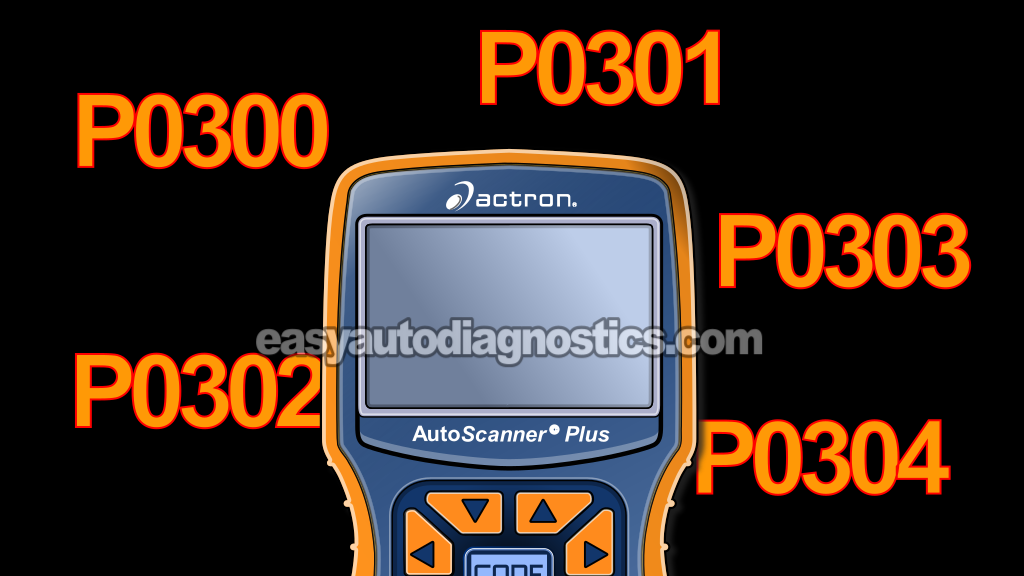
A cylinder misfire can show up for several different reasons on your 1998-2003 2.2L Isuzu Rodeo or 1998-2000 2.2L Isuzu Amigo, and when it does, it'll usually light up the check engine light with a misfire trouble code.
The good news is that tracking down the cause of the misfire is a pretty simple process when you follow a logical diagnostic path.
In this tutorial, I'll show you the same basic troubleshooting strategy I use to find out what's causing a specific cylinder to misfire. We're gonna' keep it practical, step-by-step, and you won't need any fancy or expensive diagnostic equipment to get to the bottom of the problem.
Contents of this tutorial:
ES  You can find this tutorial in Spanish here: Cómo Probar Una Falla En Cilindro (1998-2003 2.2L Isuzu Rodeo, Amigo) (at: autotecnico-online.com).
APPLIES TO: This tutorial applies to the following vehicles:
- 2.2L Isuzu Amigo: 1998, 1999, 2000.
- 2.2L Isuzu Rodeo: 1998, 1999, 2000, 2001, 2002, 2003.
What Is A Cylinder Misfire?
Each of the four cylinders in your 2.2L Isuzu Rodeo or Amigo needs three basic things to fire and produce power:
- Spark: The ignition system has to fire the spark plug at the right time.
- Fuel: The fuel injector has to deliver fuel to that cylinder.
- Air: The cylinder has to be able to compress the air/fuel mixture.
When one cylinder starts misfiring, the thing to keep in mind is that one of these three is usually missing or not doing its job correctly.
Once the misfire is severe enough, the check engine light may flash ON and OFF while the engine is running. The PCM will also store a misfire trouble code. This could be a P0300 random misfire code, or a specific cylinder misfire code: P0301, P0302, P0303, or P0304.
Along with the check engine light and the stored misfire trouble code, you're also gonna' notice one or more engine performance problems, like:
- Rough idle: The engine shakes or feels uneven when it's idling.
- Hesitation: The engine stumbles or bogs down when you accelerate.
- Loss of power: The engine feels weak when you're driving, especially when you're going up a hill or putting it under load.
The good news is that finding the cause of a cylinder misfire on your 2.2L Isuzu Rodeo or Amigo isn't complicated. With a few basic tools and a logical diagnostic strategy, you can narrow down the problem yourself. And even if you decide to take it to a shop, you'll have a much better idea of what needs to be tested before anything gets replaced.
How To Troubleshoot A Cylinder Misfire
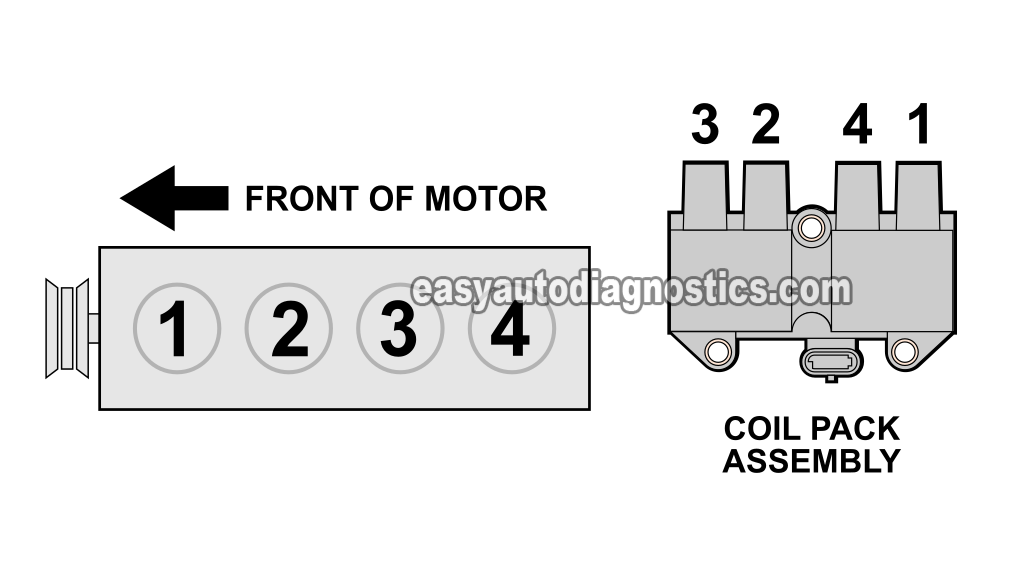
The key to finding the cause of the cylinder misfire on your 2.2L Isuzu Rodeo or Amigo is to check the three things that cylinder needs to run:
- Spark check: Making sure the spark plug is actually getting spark.
- Fuel check: Making sure the fuel injector is delivering fuel to that cylinder.
- Compression check: Making sure the cylinder can compress the air/fuel mixture.
Now, in most cases, you're not gonna' have to perform every single one of these tests. The important thing is knowing where to start and what each test is going to tell you.
So, in this section, I'll show you the diagnostic path we're gonna' follow to narrow down and pinpoint the exact cause of the misfire.
Alright, let's get started.
- STEP 1: Find out which cylinder is misfiring.
- Start with the misfire code: The first thing we've got to do is identify the cylinder that's causing the problem. Without knowing which cylinder is misfiring, we'll just be guessing.
- Use a code reader or scan tool: In most cases, this is pretty simple. Connect your code reader or scan tool and check the PCM for a specific cylinder misfire code on your 2.2L Isuzu Rodeo or Amigo.
- Know what the codes mean: A P0301 points to cylinder 1, P0302 points to cylinder 2, P0303 points to cylinder 3, and P0304 points to cylinder 4.
- If you only get a P0300: If the PCM only stores a P0300 random misfire code, then our next step is to identify the dead cylinder manually with a cylinder balance test.
- STEP 2: Make sure the misfiring cylinder is getting spark.
- Check for spark first: Once we've identified the cylinder that's misfiring, our next step is to make sure its spark plug wire is actually delivering spark to the spark plug.
- Use a spark tester: This test needs to be done with a dedicated spark tester. No worries, it doesn't have to be an expensive one. Any spark tester will do the job.
- No spark result: If the spark plug wire is not sparking, then we've found the direction we need to go in. The misfire is being caused by an ignition system problem.
- Next ignition test: Our next step is to test the ignition coil pack to see if it's the reason that spark plug wire isn't firing. I've written a step-by-step tutorial that'll show you how to do it here:
- STEP 3: Inspect the spark plug and spark plug wire boot.
- If spark is present: If the spark plug wire is delivering spark to the misfiring cylinder, our next step is to remove that spark plug and take a good look at it.
- Check the porcelain: Look closely at the spark plug's porcelain insulator. You're looking for cracks and carbon tracks. A carbon track gives spark an easier path to Ground, and when that happens, the spark never jumps the spark plug gap like it should.
- Check the electrodes: Take a look at the center and side electrodes. Make sure they're not worn down to a nub and that heavy carbon deposits aren't blocking the spark plug gap.
- Check the boot: Inspect the spark plug wire boot for carbon tracks, tears, or damage. Also make sure engine oil isn't leaking onto the spark plug wire or down into the spark plug well.
- What this tells you: If the spark plug is cracked, carbon tracked, oil-soaked, heavily carbon fouled, or worn out, you've very likely found the cause of the cylinder misfire.
- Related tutorials: These tutorials will show you what to look for:
- STEP 4: Check the misfiring cylinder's compression.
- If the ignition system checks out: If the spark plug wire is sparking and the spark plug/boot look good, then our next step is to check that cylinder's compression.
- Don't skip this test: A compression problem is one of the most overlooked causes of a cylinder misfire. But if the cylinder can't compress the air/fuel mixture, it doesn't matter how good the spark or fuel delivery is, that cylinder is still gonna' misfire.
- Compare all four cylinders: The compression reading from the misfiring cylinder needs to be in the same general range as the other cylinders.
- Low compression result: If the misfiring cylinder's compression is more than 15% lower than the highest compression reading, that cylinder can misfire or cause a rough idle.
- Compression test tutorial: I've written a step-by-step tutorial that'll show you how to do and interpret a compression test on the 2.2L Isuzu Rodeo and Amigo here:
- Here's a case study where low compression was the root cause of a misfire:
- Troubleshooting A Hard To Diagnose Misfire Case Study (GM 3.1L, 3.4L) (at: troubleshootmyvehicle.com).
- STEP 5: Test the misfiring cylinder's fuel injector resistance.
- If spark and compression are good: Once we've confirmed that the misfiring cylinder has spark and good compression, our next step is to check the fuel injector.
- Check the injector electrically: What we want to know is whether that injector's internal resistance is within specification and close to the resistance reading of the other three injectors.
- Why this matters: If the injector's resistance is way out of range, the injector isn't gonna' work correctly, and that cylinder may not get the fuel it needs to fire.
- Easy test: The cool thing is that this is a pretty simple multimeter test. You don't need to remove the injector from the intake manifold to check its resistance.
- Fuel injector test tutorial: I've written a step-by-step tutorial that'll show you how to test the fuel injectors here:
- STEP 6: Check the injector's spray pattern.
- Do this test last: This is the final step in our misfire diagnostic path. We're gonna' do it only after confirming the misfiring cylinder has spark, has good compression, and its fuel injector's resistance is OK.
- What we're checking: At this point, we want to know if the injector is actually spraying fuel correctly. A fuel injector can have good resistance and still be clogged internally.
- How the test is done: This test involves removing the fuel injector and connecting it to an adapter that lets you spray brake cleaner through it while you pulse it ON and OFF.
- What a good spray looks like: A good injector should spray in a fine mist and in a cone-shaped pattern.
- What a bad result means: If the injector doesn't spray at all, or if it dribbles instead of spraying a nice cone-shaped mist, you've found the reason that cylinder is misfiring.
- Spray pattern tutorial: This step-by-step tutorial will walk you through how this test is done:
The diagnostic strategy I outlined above is nothing more than a process of elimination. Yep, it's really that simple.
First, we identify the misfiring cylinder. That's the most important first step, because once we know which cylinder is causing the problem, we can stop guessing and start testing.
From there, we check the basics that cylinder needs to run: spark, compression, and fuel injector operation. By following this diagnostic path, you're gonna' be able to narrow down the cause of the misfire on your 2.2L Isuzu Rodeo or Amigo without wasting time or replacing parts that aren't going to fix the problem.
Vacuum Leaks —A Common Cause Of Misfire And Rough Idle
A vacuum leak can also cause a rough idle or a cylinder misfire on your 2.2L Isuzu Rodeo or Amigo, especially when the leak is affecting one cylinder more than the others.
Here are some of the most common vacuum leak spots to take a look at:
- Intake manifold gaskets: A hardened, shrunken, or damaged gasket can let unmetered air into the engine.
- Vacuum hoses: A cracked, disconnected, or loose vacuum hose can create a lean condition.
- PCV hose or elbows: A split PCV hose or cracked rubber elbow can cause a pretty noticeable vacuum leak.
- Brake booster hose: A leaking brake booster hose or bad check valve can affect engine idle.
- Plastic vacuum fittings: Cracked fittings on or around the intake manifold can also be the source of the leak.
The good news is that checking for vacuum leaks isn't a difficult or complicated process. There are several ways to do it, but my go-to test is using carburetor cleaner spray.
The basic idea is pretty simple: with the engine idling, you spray carb-cleaner around the areas where you suspect a vacuum leak. If that spot is leaking vacuum, the engine will suck in the spray and the idle will usually smooth out or change for a few seconds.
When that happens, you've found the area that's letting unmetered air into the engine and causing the rough idle or misfire problem.
More 2.2L Isuzu Rodeo And Amigo Diagnostic Tutorials
You can find a complete list of tutorials for the 2.2L Isuzu Rodeo and Amigo in this index:
Here's a sample of the tutorials you'll find in the index:
- How To Test Engine Compression (1998-2003 2.2L Isuzu Amigo And Rodeo).
- How To Test The MAP Sensor (1998-2003 2.2L Isuzu Rodeo, Amigo).
- How To Test The CMP Sensor (1998-2003 2.2L Isuzu Rodeo, Amigo).
- How To Test The CKP Sensor (1998-2003 2.2L Isuzu Rodeo, Amigo).

If this info saved the day, buy me a beer!
